

Candidates for FNL Editorial Board Election
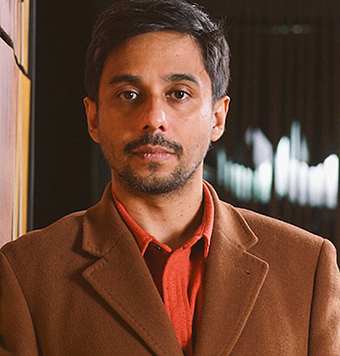
Dwaipayan Banerjee
https://sts-program.mit.edu/people/sts-faculty/dwai-banerjee/
I am an Associate Professor in the Program in Science, Technology, and Society. My research examines the intersection of technology, medicine, and politics in South Asia. I am the author of Enduring Cancer: Life, Death, and Diagnosis in Delhi (Duke, 2020) and co-author of Hematologies: The Political Life of Blood in India (Cornell, 2019), with a forthcoming book on computing history and decolonization from Princeton University Press.
I bring extensive editorial experience, currently serving as Associate Editor of Critical AI and on the editorial boards of Medical Anthropology and Education About Asia, with prior experience as Editor of Position Pieces at Medicine Anthropology Theory. At MIT, I have contributed to committees addressing curriculum development, faculty diversity, and strategic initiatives. I am running for the Faculty Newsletter Editorial Board because I believe the Newsletter plays a vital role in fostering informed faculty dialogue. My background in STS, which centers on how knowledge is produced, circulated, and contested, combined with my editorial experience, positions me to help ensure the Newsletter remains a thoughtful, independent space for faculty voices.
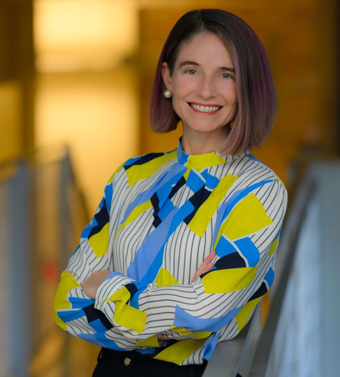
Catherine D’Ignazio
https://dusp.mit.edu/people/catherine-dignazio
At an institute that spans many schools, departments, disciplines and buildings, the Faculty Newsletter brings us together to engage, debate, disagree, and take action on the important issues of our time. There is no shortage of such issues at the moment – higher education in the US is facing an unprecedented set of attacks and academic freedom is increasingly on the line. The FNL is an essential civic forum for us to navigate this moment together, and I will work to preserve its independence as well as ensure that it is open to a wide range of perspectives. To this role, I bring a longstanding interest in democracy, inequality and public interest technology. I am the author of two award-winning books and numerous articles on feminist data science. My lab builds AI tools for civil society organizations to defend human rights. At MIT, I have joined two faculty groups working on academic freedom: AAUP and MITCAF. I remain convinced that democracy works and communities are stronger when we can build healthy spaces of listening, discussion, dissent and debate. This is what I will work for on the board of the FNL.
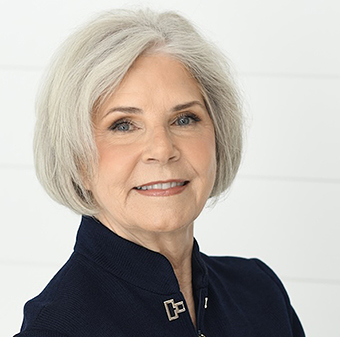
Amy Glasmeier
https://dusp.mit.edu/people/amy-glasmeier
I am Amy Glasmeier, an economic geographer and regional planner in the Department of Urban Studies and Planning. I was the department’s first woman head and the first chair from outside the department. My work spans economic and energy geography, regional development, and public policy. I have taught internationally, including at Skoltech, while also holding research appointments at the Social Science Research Council, where I studied the mental health of the U.S. Marine Corps and Navy.
At MIT, I have served on numerous Institute committees, including six years as a member and chair of the Family and Work Council, where I helped redesign the Quality of Life Survey, and I currently serve on the Faculty Policy Committee. I have also contributed to MIT’s Value Statement and served on the Committee on Outside Engagements.
My scholarship includes books, articles, and data analysis on economic, industrial, and demographic change. I served for five years as the John Whisman Scholar at the Appalachian Regional Commission in Washington, DC. When I joined MIT from Penn State, I brought with me the MIT Living Wage Calculator, a 22-year public service tool now institutionalized and widely used by individuals and employers nationwide.
I am enthusiastic about joining the Faculty Newsletter editorial team. As an editor and journal founder, and currently President of the Regional Studies Association, I look forward to contributing energy and perspective as the Newsletter continues to evolve.
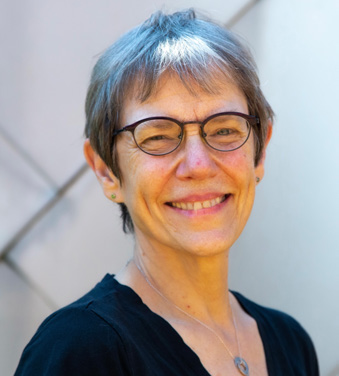
Sally Haslanger (current editorial board member)
http://sallyhaslanger.weebly.com/
I am Ford Professor of Philosophy in the Department of Linguistics and Philosophy. I am also an affiliate in Women’s and Gender Studies and MIT D-Lab. Broadly speaking, my work links issues of social justice with contemporary work in epistemology, metaphysics, and philosophy of language and mind. Recently I have been working on social structural explanation with an emphasis on the materiality of social practices and the role of ideology in shaping social subjects. This has led me to explore complexity theory as a tool to model social systems and social transformation. My work has been widely reprinted and translated into French, Spanish, German, Basque, Turkish, Chinese, Japanese, and Korean. I served as President of the American Philosophical Association Eastern Division 2013-14 and was elected member of the American Academy of Arts and Sciences (AAAS) in 2015. I currently serve as Assistant Secretary of Membership for the AAAS. I was awarded an ACLS Fellowship in 2002 and a Guggenheim in 2018-19. In 2024, I received an Honorary Doctorate (Doctor Philosophiae Honoris Causa) from the University of Oslo, Norway and the APA’s Quinn Prize. I am currently the president of MIT’s AAUP Chapter. It is essential that the faculty have a strong voice in determining the future of MIT. For nearly forty years, the MIT Faculty Newsletter has been an important source of information, debate, and critique and must continue to call attention to the challenges and opportunities we face. It is our responsibility, as a faculty, to lead MIT, and in order to do so, we must have open and engaged discussion. Having served on the FNL Editorial Board for several years, I am vividly aware of some of the challenges we face as a publication and am keen to work with others to respond constructively to the Silbey Report and input from the faculty as a whole.
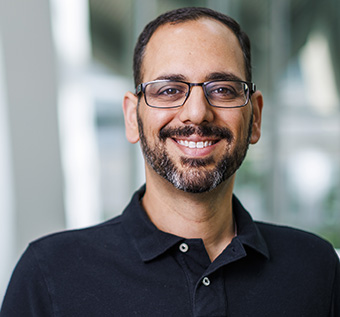
Or Hen
https://physics.mit.edu/faculty/or-hen/
I am honored to be nominated for the Faculty Newsletter Board. The FNL is a vital instrument for our community, providing a shared space where faculty across disciplines can engage with the issues that shape our institutional life.
If elected, I will work to ensure the Newsletter remains a trusted source of context and clarity. My goal is to support reporting that addresses the everyday realities of research, education, and governance, while ensuring the publication reflects the full diversity of faculty perspectives. I view this role as one of service and stewardship, and I look forward to contributing to the editorial team’s essential work.
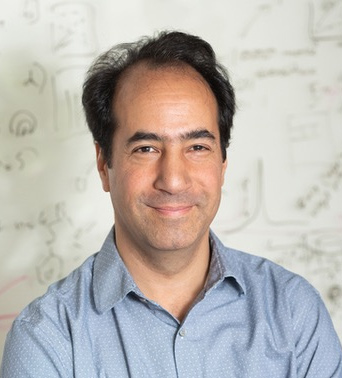
Alan Jasanoff
https://jasanofflab.mit.edu/
I am a bioengineer and neuroscientist with primary interest in studying biological bases of behavior and cognition. I am also a deep believer in the importance of communication across academic boundaries, particularly as a means for promoting understanding of consequential but complex topics. As a first-generation scientist but third-generation scholar (for better or worse), I am used to speaking with colleagues from a wide range of backgrounds, and I have formal experience with cross-disciplinary communication through longstanding membership on the MIT Press Editorial Board and via my own work, which includes authorship of a public-facing book and articles in multiple fields. Complementing this, I have served for the past six years on the MIT Faculty Policy Committee, giving me a close perspective on some of the Institute’s most pressing problems. As a member of the FNL Editorial Board, I would advocate for three principal objectives: (1) rigorous editorial practices; (2) inclusion of content that engages a broad readership; and (3) consistent focus on issues most relevant to MIT’s community and mission. I am also extremely interested in ways that the FNL could help catalyze productive responses to the current crisis in national support for academia and research.
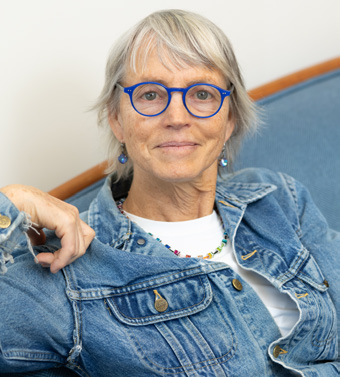
Nancy Kanwisher
https://mcgovern.mit.edu/profile/nancy-kanwisher/
I am a professor of cognitive neuroscience in the Department of Brain & Cognitive Sciences and an investigator in the McGovern Institute for Brain Research. I arrived at MIT as an undergrad in 1977 and have been here most of the time since. I am not quite a lifer though. After completing my PhD under the brilliant mentorship of Molly Potter, I did postdocs at Columbia and Berkeley, and taught at UCLA and Harvard before returning to MIT in the mid 90s. Though I have taken MIT to task for many things over the years, and proudly wore an IHTFP T-shirt as an undergrad, there is no place in the world I would rather be. I still have to pinch myself to believe the astonishing privilege of getting to discover new things about the human brain, and to work with brilliant MIT students and faculty. Although I have never myself published anything in the FNL, I value its role as a venue for open discussion of topics of importance to our faculty, and for the expression of opinions, especially when they are unpopular.
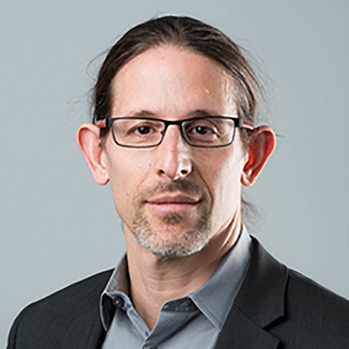
Retsef Levi
https://mitsloan.mit.edu/faculty/directory/retsef-levi
After receiving a PhD from Cornell University Retsef Levi joined the faculty of the Sloan School of Management in 2006. He is also affiliated faculty at the Operations Research Center. Between 2015-2024 he served as the MIT Sloan Faculty Co-Director of the Leaders for Global Operations (LGO) program, and he currently serves as the Faculty Director of the MIT Sloan Food Supply Chain Analytics and Sensing (FSAS) Initiative, and as the faculty co-lead of the Machine Intelligence for Operations & Manufacturing (MIMO) effort. He also serves on the MIT Committee on Research Computing. During his tenure at MIT Retsef led and was part of multiple large scale, multi-faculty international industry-based research programs, collaborating with MIT faculty from the schools of Engineering, Sciences and Architecture and Planning, in areas such as food safety, smart analytics in bio-manufacturing, agriculture markets optimization and design and optimization of water systems. Retsef is passionate about mentoring graduate students and teaches regularly master and executive students in degree and non-degree programs on analytics, risk management, system thinking, healthcare and food systems. He won several prestigious teaching awards. Retsef looks forward to an opportunity to serve on the editorial board of the FNL and facilitating cross-campus interactions.
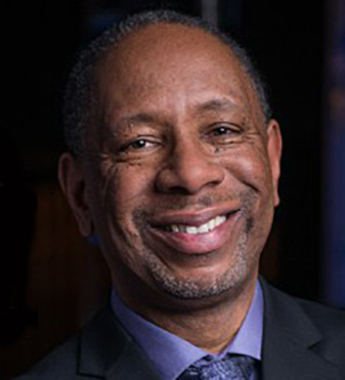
Ceasar McDowell (current editorial board member)
https://dusp.mit.edu/people/ceasar-mcdowell
I am the Professor of the Practice of Civic Design in the Department of Urban Studies and Planning, the Principal Investigator of OpenDoc Lab, and a former Associate Director of the Center for Constructive Communication. Additionally, I served as Associate Department Head at DUSP. With over 25 years of experience at MIT, I have been involved in numerous committees and working groups for DUSP, SA&P, and the Institute.
Ten years ago, I joined the editorial board of the Faculty Newsletter (FNL) and am currently in my second year of a two-year term as co-chair. Throughout my tenure, I have been dedicated to strengthening the independent faculty voice at MIT, which is crucial for faculty members with limited opportunities to be heard across the Institute.
Over the next year, the FNL will undergo a series of changes to improve its operations and encourage opinions and viewpoints from across the Institute, while ensuring it maintains its commitment to underheard voices.
I am committed to using my professional skills in process management, my dedication to the values of the FNL, and leadership to facilitate the board through these challenging changes. I look forward to working with the board to ensure that the Faculty Newsletter remains a strong and effective advocate for the MIT faculty.
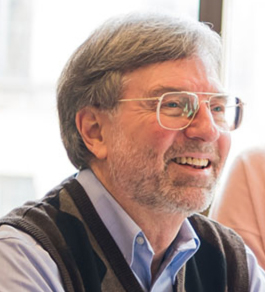
Warren Seering (current editorial board member)
https://meche.mit.edu/people/faculty/Seering@MIT.edu
I believe that at its best the Institute operates well because those deciding what should be done become informed and then employ exceptional reasoning skills to the processes of making decisions and executing plans. I see the Faculty Newsletter as an enabler of informed decision making. We as an Institute are in the process of reconfiguring, particularly with regard to computing, our physical plant, Kendall Square, the student experience, and the choices that we make in engaging the world. If reelected, I will continue to work toward configuring the Newsletter to be a venue in which all faculty points of view are welcome and represented.
My research and teaching interests are in engineering design and product development, particularly in understanding the processes by which organizations produce complex products and systems. A personal interest has been study of the career paths of our students and of the professional knowledge and skills that they employ.
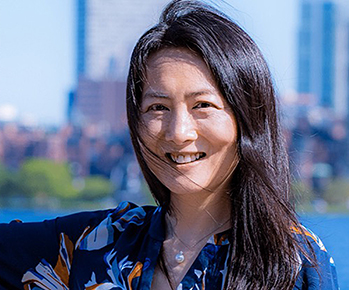
Yang Shao-Horn
https://chemistry.mit.edu/profile/yang-shao-horn/
https://meche.mit.edu/people/faculty/shaohorn@mit.edu
My name is Yang Shao-Horn, and I am a Professor of Chemistry, Materials Science and Engineering, and Mechanical Engineering at MIT. I have developed and taught courses cross-listed across multiple departments and have advised more than 150 students and postdoctoral scholars at MIT, now pursuing successful careers in academia (over 50), national laboratories, startups, and industry. My research integrates chemistry, physics, and engineering to address fundamental challenges in energy and chemical transformations, while translating learnings into technologies such as batteries and hydrogen-based carriers for sustainable energy, chemicals, and fuels.
I am deeply committed to strengthening the independent faculty voice at MIT and to advancing the scientific and intellectual pursuits that lie at the core of the Institute’s mission. This includes advocating for robust institutional support for faculty, staff, postdocs, and students; fostering open, thoughtful dialogue; and ensuring that excellence, rigor, and depth in scholarship alongside translational and entrepreneurial activities are fully supported across disciplines. As MIT continues to evolve in response to global challenges and opportunities, our community faces increasing demands that require sustained and principled institutional investment. If elected, I will advocate elevating emerging issues that affect faculty and staff resources, empowerment, and intellectual vitality.