

How Birding and Engineering Brought Me to Write: Birds Up Close: An Engineer Explores Their Hidden Wonders
Lorna GibsonMy upcoming book, Birds Up Close: An Engineer Explores Their Hidden Wonders, will be published by MIT Press on April 28. How did I get from my research on the mechanical behavior of cellular materials (think engineering honeycombs and foams, natural materials like wood and bamboo, and medical materials such as scaffolds for regenerating damaged tissues in the body) to writing a book about how birds work? It’s been a journey.
I grew up in Niagara Falls, Ontario, famously home to many tourist traps around the falls and, less famously, to many large, impressive feats of engineering: an observation tower, 50 stories tall, near the falls; bridges high up over the gorge and river; and the canals, tunnels, and reservoirs that all feed water from above the falls to the hydroelectric power stations below. As a kid, I wondered how all these structures worked. How did the towers and bridges stand up? How did the canals, tunnels, and reservoir manage the huge flow of water to the power station? To learn more about mechanics – how forces are transmitted through materials and structures, how much force it takes to break something, how fluids flow – I studied civil engineering as an undergraduate at the University of Toronto and then materials engineering as a graduate student at Cambridge University.
Growing up, our family often took Sunday afternoon walks along the Niagara River or along the Niagara Escarpment. I especially loved going down the Niagara Glen, climbing down the metal staircase built into the cliff face of the gorge below the falls, walking along the more rugged trails through old growth forest and past huge boulders; it always seemed like a magical, hidden place, overlooked by most tourists. On our walks, my mother taught my two brothers and me how to identify the common birds, trees, and flowers in our area. In the winter, we always had a bird feeder in the backyard and got the usual customers: sparrows, chickadees, juncos, blue jays, cardinals, and the occasional woodpecker. I grew to love being outside and enjoying nature. And over the years, I became more of a birder, paying attention to the birds I saw in my daily activities and when I traveled.
When I tell my students that I go birding in Boston, they’re often surprised, because they feel there aren’t any interesting birds to see in the city. I tell them that if you think you won’t see anything, and you don’t look, then you won’t see anything. Me, I’m always on the lookout: around Boston and on my travels.
I love it when migrating ducks appear at Jamaica Pond in the fall. It’s quite a parade. The ever-so-elegant hooded mergansers usually arrive first, early in November, and stay until the pond freezes over. They’re soon joined by a stream of others: ring-necked ducks and ruddy ducks, the latter almost comical with their stiff upward pointing tails and abrupt dives down into the water; a few common mergansers; the occasional red-breasted merganser; and, from time to time, wood ducks, the males with delicate feathers seemingly painted with a combination of colors that seems as though it just shouldn’t be possible: green head crest, black face, white bridle on the front of the neck, speckled-chestnut breast, slatey-grey back, and buff belly. Joining the fray are pied-billed grebes, small and energetic, diving over and over again in the water, and northern shovelers, skimming the surface of the water for aquatic invertebrates with their shovel-like bills. And once in a rare while, a lone loon. It’s all delightful.
Biking to MIT, I would sometimes see red-tailed hawks perched on the turret of Maseeh Hall or the roof of Hayden Library. In the spring of 2004, a pair of red-tails nested in a pine tree on Mass. Ave. just outside of Building 9; IS&T installed a webcam, keeping at least one of our colleagues distracted for weeks until the young fledged. And in June of 2018, a juvenile peregrine falcon standing in the roadway in Kendall Square brought traffic to a standstill; a Cambridge police spokesman thought that it had fallen from a nest at the old courthouse.
On my way to a conference in the Colorado Rockies, I abruptly pulled the rental car over when I spotted a pair of bald eagles, their talons locked together, dropping out of the sky, spiraling down in their courtship cartwheel display before releasing and flying up and away just before reaching the ground. After giving a talk at Sandia National Labs in Albuquerque, my (fluid mechanics/birder) host and I drove down to Bosque Del Apache National Wildlife Refuge where there were tens of thousands of wintering snow geese and sandhill cranes and even a few whooping cranes. As a coyote approached, a huge flock took off in a cloud of wingbeats, clattering as they rose into the sky.
Further afield, in the Galapagos I stood in awe as hundreds of blue-footed boobies dove into a bay, plunging head first, wings tucked in at the last moment before hitting the water, then bobbing up and taking off in a vortex of birds rising a hundred feet into the air before plunging again, over and over. I loved seeing Galapagos penguins swimming, zooming along beneath me as I snorkeled in a quiet bay (they can go up to 22 mph). In northeastern Australia, in the Daintree rainforest, it was a real treat to spot a rare, six-foot tall cassowary, with blue skin on its neck and a bony casque on the top of its head (cassowaries are ratites related to ostriches and emus). And at Phillips Island, roughly 90 miles from Melbourne, more penguins – little penguins – coming ashore and waddling to their burrows in the dunes above the beach at sunset.
*****
When I was a graduate student working on the mechanics of foams, a colleague mentioned to me that he had heard that woodpeckers have a foam-like material between their skulls and brains to protect their brains from the impact of pecking. And protection certainly would seem to be something they need: they peck over and over, up to 20 times a second, and hard enough to make quite a racket. At the time, I was focused on my doctoral thesis, but I kept this in the back of my mind, thinking that one day I would look into it. After all, I love birds and specialize in the mechanical properties of foams, so how could I resist?
It turns out that there is no special foamy material protecting their brains. After studying the question, eventually I recognized that because woodpeckers have such tiny brains, they don’t need the kind of protection that larger animals need. I wrote a scientific paper about this, going into more detail, and started giving talks about it – first to academic audiences, and then, in a slightly different version, to birding groups. Eventually, with MITx, I made a video series, Built to Peck, explaining how woodpeckers avoid brain injury when they peck. In the videos we also showed off the remarkable ornithology collection at Harvard’s Museum of Comparative Zoology, which has specimens of 80% of the roughly 11,000 species of birds in the world; took a little field trip to Hall’s Pond (in Brookline just over the BU bridge), named for Minna Hall, one of the founding mothers of the Massachusetts Audubon Society; and recounted the founding of Mass Audubon in 1896.
After finishing my last academic book, I began to think about writing a book for a general audience; browsing local bookstores, I noticed that while there were plenty of such books written by physicists, biologists, and mathematicians, there were few written by engineers. With my experiences with the woodpecker talk, I thought that a book about how birds work, using my background in materials science and mechanics and drawing on my love of birds, engineering and teaching, might have broad interest.
I started by reading ornithology textbooks and looking up the research findings behind the textbooks, thinking about how I could explain these ideas with what I had learned as an engineer. I quickly realized that there is a rich literature that birders would appreciate if explained well.
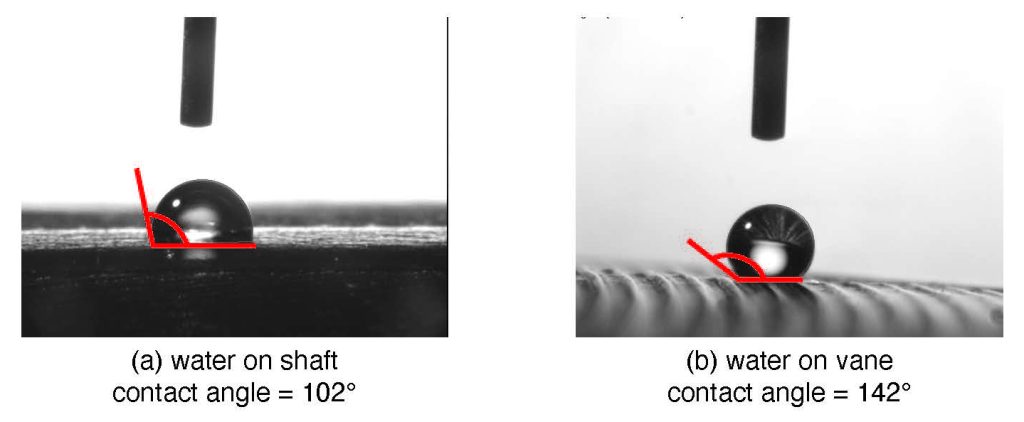
Think of feathers, for instance. Feathers give birds their color, from the bright red of a male cardinal to the iridescent reds and greens of ruby-throated hummingbirds. Feathers keep birds warm and dry: down provides excellent insulation against heat loss; and water really does roll off a duck’s back. Feathers form the aerodynamic shape of the wing, enabling flight. A barn owl’s flight feathers suppress sound, allowing it to fly nearly silently, while its ruff feathers reflect and focus sound into its ears, enabling the owl to hunt in total darkness by sound alone. The two chapters of the book on feathers explain how their remarkable properties arise from their microscopic structure.
Bird bones are especially lightweight yet structurally efficient. The long bones in birds tend to be thinner walled, relative to their diameter, than those in mammals. Some are hollow, acting as reservoirs for air in the respiratory system. And many (e.g., vertebrae, pelvic bones) are fused together making them more rigid than the equivalent separate bones found in mammals.
Bird bills and tongues can be highly specialized. Hummingbirds, for instance, draw nectar into their bills with unusual split tongues with tiny fringes at the tips that open up when immersed in nectar, but that close up into tubes (from surface tension) as they are drawn out of the nectar and into the mouth. I used to think that sandpipers needling the wet sand at the beach were just randomly poking around, hoping to find prey. But, instead, it turns out that their needling generates waves that reflect off prey such as worms and mollusks and that pressure-sensing cells in the tips of their bills detect the resulting changes in water pressure, allowing them to find prey without touching it; ornithologists call this “remote touch.”
Bird eggs come in a huge variety of colors, sizes, and shapes. A recent study of the shape of nearly 50,000 eggs has revealed that the shape of an egg is determined, at least in part, by the flight ability of a species: for two species of the same size, with eggs of the same volume, the species that is the more aerodynamic flier has narrower pelvis, and a narrower and longer egg, than a species that is a poorer flier.
It’s hard not to be in awe of bird flight: the speed and maneuverability of a peregrine falcon that kills a pigeon by hitting it in mid-air, then catches it in its talons before the pigeon hits the ground; the hovering of hummingbirds that allows them to even fly backwards; and the dancing through the sky of thousands of starlings in a murmuration.
It is my hope that the book will give birders and others interested in natural history a new perspective on the wonder of birds. You can learn more about the book and watch the woodpecker video at www.birdsupclose.org.