

Candidates for FNL Editorial Board Election, May 2026
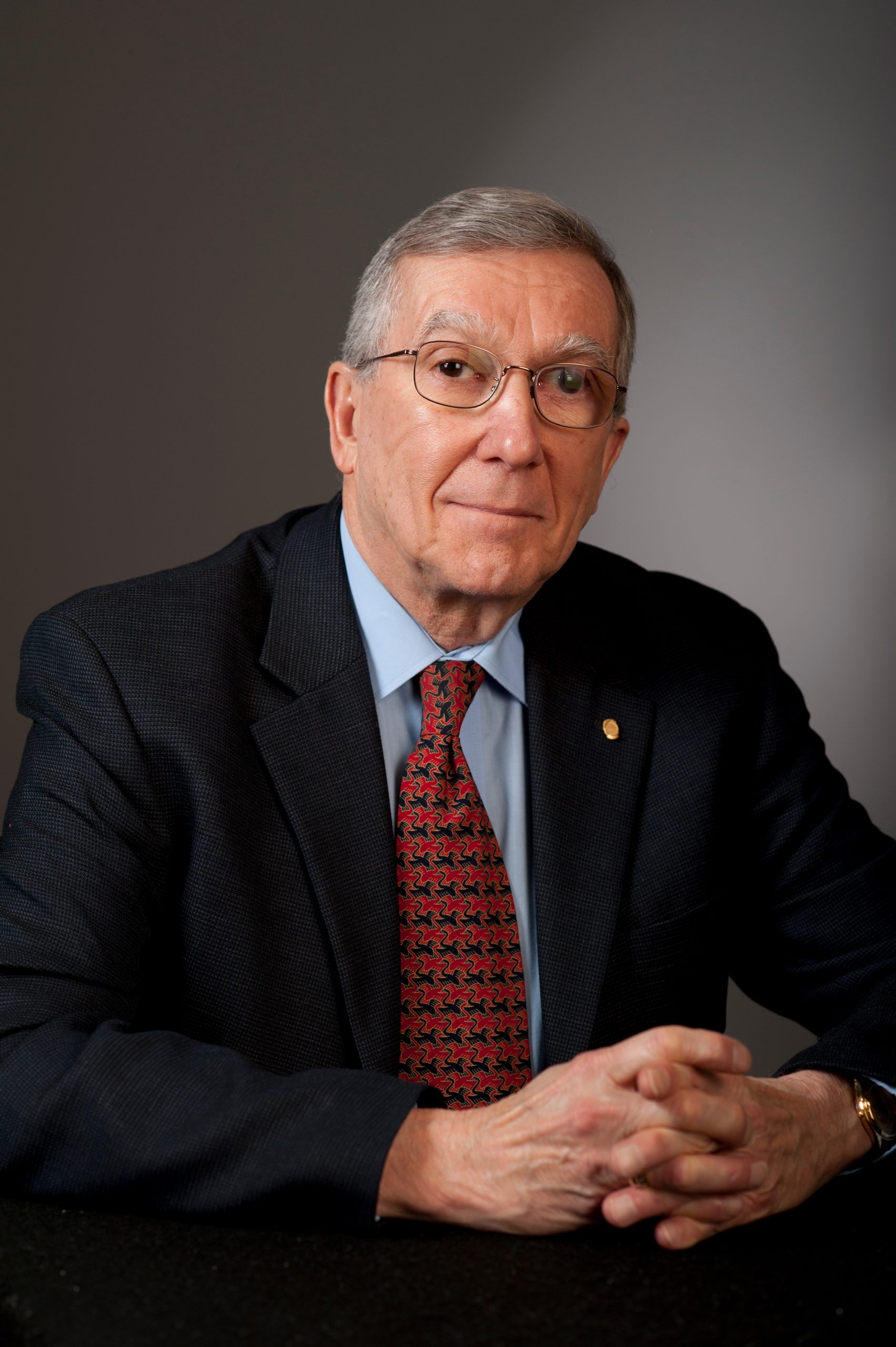
Nicholas A. Ashford
http://ashford.mit.edu
Nicholas Ashford is Professor of Technology & Policy in the School of Engineering and Director of the Technology & Law Program at MIT, where he teaches courses in Environmental Law, Policy, and Economics; Law, Technology, and Public Policy; and Technology, Globalization and Sustainable Development. Dr. Ashford is a Faculty Associate of the Institute for Data, Systems, and Society in the School of Engineering; the Institute for Work and Employment Research in the Sloan School of Management; and the Environmental Policy Group in the Urban Studies Department. He holds both a Ph.D. in Chemistry and a Law Degree from the University of Chicago, where he also received graduate education in Economics.
Dr. Ashford is the co-author of two textbooks/readers used in his classes: Technology, Globalization, and Sustainable Development: Transforming the Industrial State (2018, revised edition, Routledge/Earthscan Press; and Environmental Law, Policy and Economics: Reclaiming the Environmental Agenda (2026, Revised Edition, Anthem Press. He has published several hundred articles in peer-reviewed journals and law reviews.
Dr. Ashford has published in the MIT Faculty Newsletter in the areas of distractive driving and first amendment protection. He desires to contribute articles in law and technology to the MIT Faculty Newsletter. The following publications are representative of this work.
Knox-Hayes, J et al. (2025) The Equitable Resilience Framework: A Environmental Justice Strategy for Community-led Resilience Planning, World Development Perspectives 40:100738.
Ashford, NA (2025). “Major Challenges to Education for Sustainable Development” Chapter 7 in World Sustainability Series. North American and European Perspectives on Sustainability in Higher EducationNature Springer
Ashford, Nicholas A. and Anthony R. Atto (2024). ‘Technology Bargaining in the Information Age Should Require Mandatory Decision Bargaining.” Chapter submitted to the Cornell University Press.
Masri, S., CS Miller, RF Palmer, and NA Ashford (2021) “Toxicant-Induced Loss of Tolerance for Chemicals, Foods and Drugs: Assessing Patterns of Exposure Behind a Global Phenomenon” submitted to Environmental Science.
“A Four-day Workweek: a Policy for Improving Employment and Environmental Conditions in Europe” (2013). N. A. Ashford and G. Kallis. The European Financial Review April-May 2013, pp. 53-
86.
“Broadening Capital Acquisition with the Earnings of Capital as a Means of Sustainable Growth and Environmental Sustainability” (2012). R. Ashford, R. P. Hall, and N. A Ashford. The European Financial ReviewOctober-November 2012, pp. 70-74. Available at http://www.europeanfinancialreview.com/?p=5984
“The Crisis in Employment and Consumer Demand: Reconciliation with Environmental Sustainability” (2012). N.A Ashford, R. P. Hall, and R.H. Ashford. Environmental Innovation and Societal Transitions. Volume 2, Issue 1: 1–22, March 2012,
Ashford, N.A., Caldart, C.C. (2023). “Environmental Protection Laws” in: Quah, S.R. and Cockerham, W.C. (eds.)The International Encyclopedia of Public Health, 3rd edition. Oxford: Academic Press.
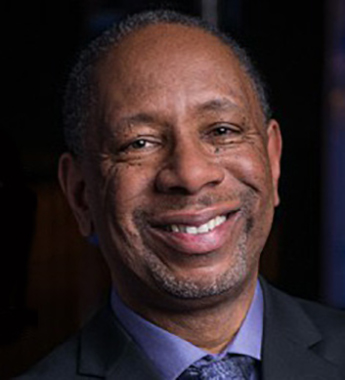
Ceasar McDowell
https://dusp.mit.edu/people/ceasar-mcdowell
The FNL has been part of my life at MIT for years – first as a reader, then as a contributor, and eventually as a Board member and leader as Secretary and Co-Chair of this Board. In each of those roles, I came to understand more deeply why this publication matters in a way that goes beyond what appears on its pages. MIT has no faculty senate. There is no standing forum where faculty exercise independent deliberative authority over the direction of this institution. The FNL is not a substitute for that – but it is the closest thing we have to a shared faculty commons, a place where the full range of voices in this community can surface concerns, challenge assumptions, and hold the Institute in honest dialogue with itself. Serving on this Board taught me both how precious that role is, and how much it depends on the people entrusted to protect it.
That experience – including its more difficult moments – convinced me that the FNL’s strength comes not from unanimity but from integrity. The Board I want to help build would bring together faculty who disagree – about politics, about pedagogy, about MIT’s direction – but who share an unshakeable commitment to one thing: that this publication belongs to all faculty, equally, and that its independence must be protected from any pressure, internal or external, that would narrow whose voices are heard or which questions can be asked. I have seen what happens when that commitment wavers. I have also seen what becomes possible when it holds – when the FNL creates space for a genuine exchange on the hardest questions facing our community, and faculty across the Institute recognize themselves in it.
If given the opportunity to serve again, I would bring to the work both what I learned during my tenure and what I have learned since stepping away. I would prioritize completing the governance and process recommended in the Silbey Report. The FNL needs clearer policies, more consistent processes, and reliable structures. I would work to ensure the Board draws from the widest possible range of MIT’s faculty, particularly those who have felt the FNL was not quite for them. And I would approach every editorial question with the same orientation that has guided my research and my teaching: that the most important conversations are rarely the easiest ones, and that a community’s capacity to have them honestly is one of the most valuable things it can protect.
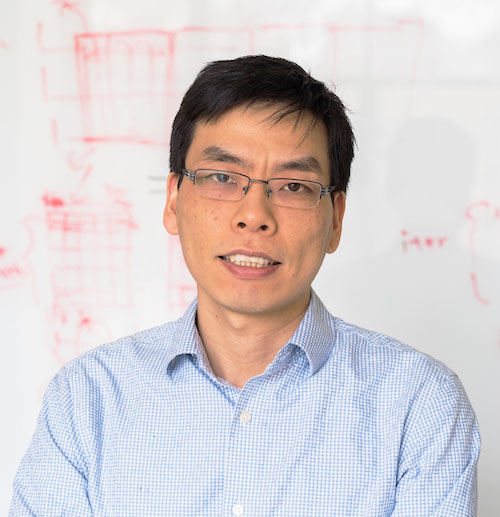
Bin Zhang
https://zhanggroup.mit.edu/
I would like to serve on the MIT Faculty Newsletter Editorial Board to contribute to thoughtful, forward-looking discussions on the evolving role of the faculty in research, education, and institutional life.
My work sits at the intersection of AI and the molecular sciences, spanning computational chemistry, molecular biophysics, genomics, and generative modeling. This cross-disciplinary perspective allows me to engage with a broad range of scientific communities and to reflect on how emerging technologies, particularly AI, are reshaping discovery, collaboration, and training across fields.
I also bring experience with international scientific collaboration in a period of increasing geopolitical complexity. As global partnerships become both more essential and more constrained, faculty perspectives on how to sustain productive, open scientific exchange are especially important.
In addition, I serve as a Reviewing Editor at eLife, where I regularly evaluate and synthesize diverse scientific contributions, an experience directly relevant to the editorial mission of the Newsletter.
I would welcome the opportunity to help ensure that the Faculty Newsletter continues to represent a wide range of perspectives and to foster informed, constructive dialogue across the Institute.